
Bodyweight training is one of the fundamental skills all fitness aficionados should learn. Not only does it mean you can train anywhere without the need for equipment, but it can help teach you the correct movements and form that you’ll need for weighted exercises.
The ability to train wherever you are is by far the biggest bonus of bodyweight training. Whether you’re on holiday and don’t have access to a gym or you’re trapped at home for months because of a global pandemic, it puts the ball in your court when it comes to keeping fit.
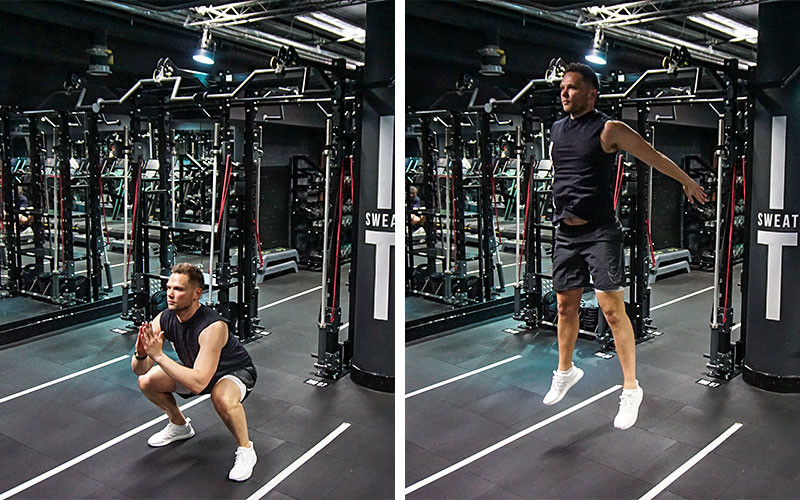
Squat jumps
Muscles worked: Quads, hamstrings, glutes, lower back, abdominals
As we’ve mentioned many times, squats are one of the most important exercises to add to your training plan. They work a wide range of muscles, including the largest in the body, and they’re at the top of the pile when it comes to functional movements.
The jump squat is a progression of the squat which modifies it in a number of ways. By adding the jump element to the exercise you start to train your explosive power – something that’s beneficial to sports where you need quick bursts of speed. It also means you’re pushing your cardio fitness harder, which is why the exercise is so popular in HIIT classes.
How to do it:
From a standing position with your feet hip-width apart. Lower into a squat with your back straight and your thighs almost parallel to the ground. From there, push against the ground and jump into the air aiming to gain enough height to be completely vertical off the ground.
As you land, keep the knees slightly bent and then lower back into the squat position with a controlled motion. Once lowered, repeat the movement. Ensure that the landing and lowering of the exercise feels comfortable with minimal impact on the heels or knees.
Safety tip: Remember that the exercise is a squat and getting that form right is essential to performing it without injury.
Bear crawl
Muscles worked: Most across the body with key areas being the core, shoulders, arms and glutes
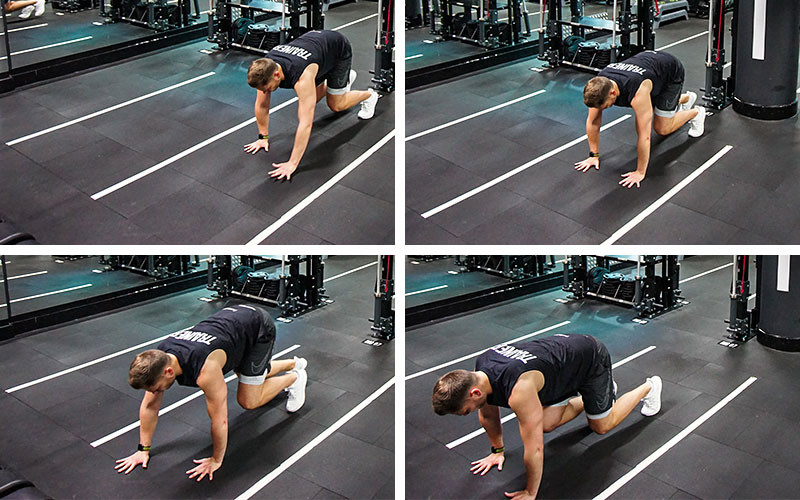
To the casual non-fitness observer, the bear walk is basically walking across the floor on all fours. Essentially it is, but this simple movement works an enormous range of muscles across the body and offers a number of functional benefits to any workout.
How to do it: Start in a plank position with both hands directly underneath the shoulders. Move your knees forward so they come slightly off the floor and the thighs are perpendicular to the body. Step forward with one knee and move the alternate arm forward at the same time. Continue for however many steps the space will allow then repeat the same format backwards.
One of the principal muscle groups being used during the exercise is the core, so make sure to maintain the stiff plank position as you move forwards.
Shoulder taps
Muscles worked: Core, shoulders, triceps, glutes, quads
When it comes to core exercises the humble plank is hard to beat. However, if you’re taking things up a notch then there are a number of variations to make the movement more demanding.
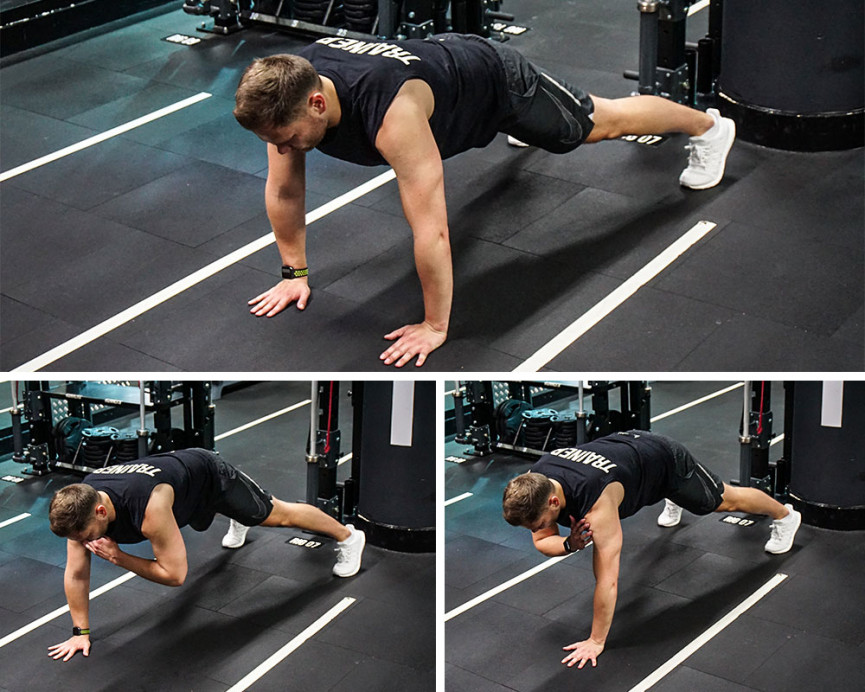
Adding shoulder taps to the plank means that you’re not only incorporating the arms into it more, but the lack of stable positioning means you have to work your core at a higher level.
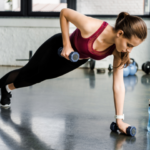
How to do it: From the plank position, lift up one hand across the front of the body and tap the opposite shoulder. Lower that hand and repeat the movement with the alternate hand. Be sure to maintain a tight core throughout the exercise as the main workload comes from the stability core muscles holding the body in place. If you start wobbling left and right you’re no longer working the core effectively.
Chest to floor burpees
Muscles worked: Arms, chest, quads, glutes, hamstrings, abs – pretty much everything.
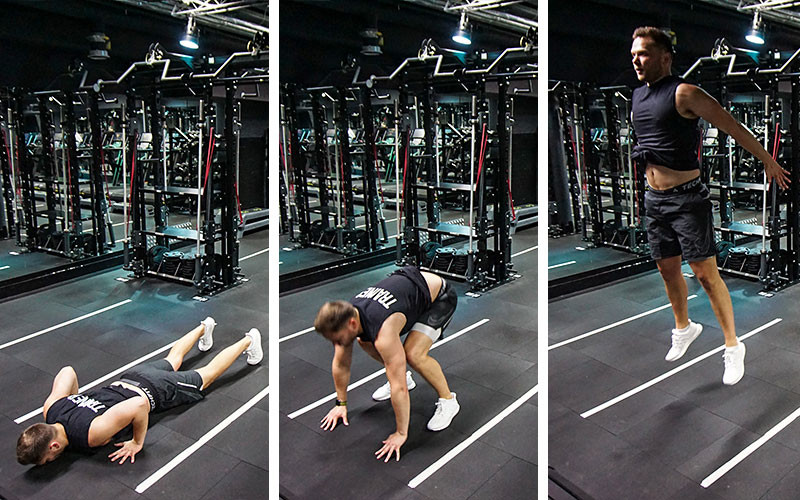
Yes, we know. Nobody ever wants to do a burpee, but trust us, if done properly they’re one of the most rewarding exercises you can add to your workouts. They’re not the simplest movement to get right though and many studios throw them into a class without making sure that people are doing them correctly.
How to do it: From a standing position, jump your feet backwards as you lean forward and lower your hands to the floor. From there lower your chest to the ground in one fluid motion. With an explosive press-up, jump your legs forward and propel your body into a squat position before jumping into the air. Soften the knees and land before returning to an upright position and repeating the movement.
Safety tip: Make sure your back is straight throughout the whole motion. Maintaining the form for the duration of the exercise is difficult when fatigued, so if you can’t maintain a safe position, rest and start again.
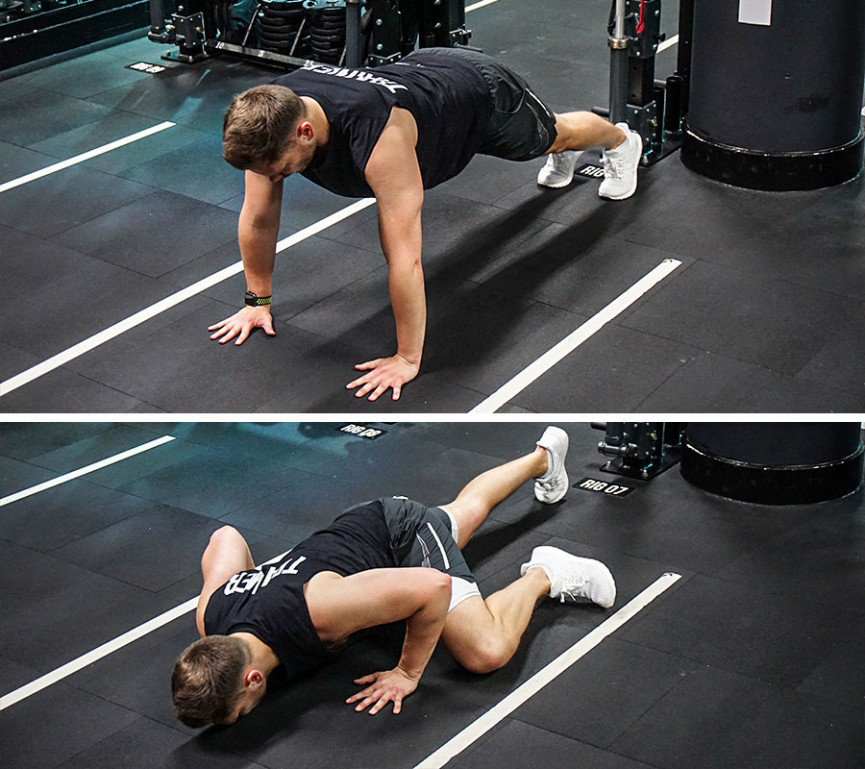
Spider-man push-up
Muscles worked: Pectoral muscles, deltoids, triceps and core.
Remember when Spider-man sued to climb along the floor in the old 1980s show and they filmed it like he was walking up a wall? Well, this is named after that movement. As exercises go, it veers towards the more advanced end of the bodyweight spectrum taking a normal push up and introducing a tricky core element.
How to do it: From a plank position, lift one leg off the ground and pull the knee up toward the body. At the same time lift the leg outwards so it’s raised alongside the body instead of underneath, then lower the arms into a push-up position. From there, push yourself back up and move the foot back into that initial plank position. Repeat with a consistent, fluid motion.
Safety tip: For many, the inclusion of the leg raise may cause issues when it comes to mobility. Try to move the leg so that it remains above the ground and avoid twisting the body too much.
One-legged walkout
Muscles worked: Pectoral muscles, deltoids, core, lower body mobility
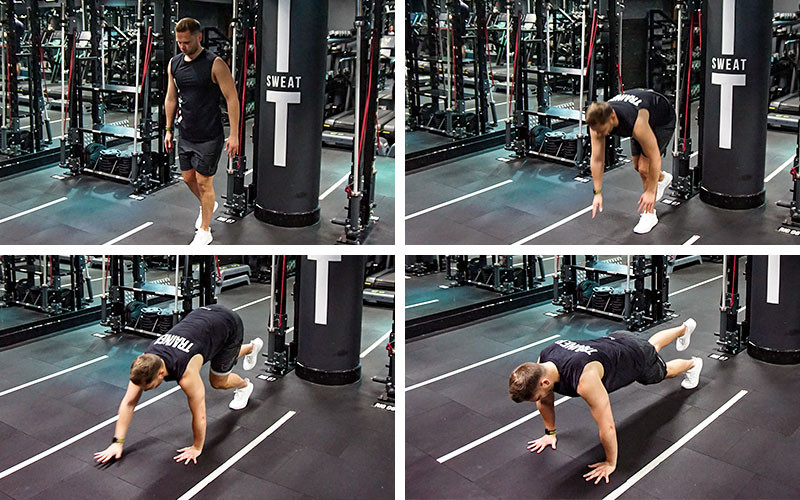
Often used as part of a dynamic warm-up routine, the walkout is a great exercise that combines some strength training with an element of mobility. Here we’ve covered the one-legged variant to add an extra challenge for both the upper body and core.
How to do it: From a standing position, lift one leg off the ground and lean forward to place your hands on the floor. Try to keep your standing leg as straight as possible during the movement to ensure the hamstring is stretched and walk your hands forward until you’re in a one-legged plank position. From there, step the hands backwards and push yourself back up into standing. Perform four or five reps on one leg before switching over to maintain the momentum.
Safety tip: Try maintain a strong core as you move in and out from the final plank position.
V-up
Muscles worked: Core
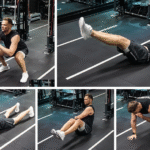
An incredibly simple movement but one that’s often overlooked in beginner workouts, the V-sit is an excellent core exercise that, due to the positioning of the body, works a wider range of muscles than a standard floor to knee sit up. The fact that you have to maintain a position raised from the floor makes for a more challenging exercise.
How to do it: Sit on the floor and raise your shoulders and legs off the ground. Try to keep your head in a neutral position with the spine and pull your thighs and torso together. Move back to the starting position and repeat. To maximise the exercise, carry it out in a slow and controlled movement, taking two or three seconds to lower the body to the starting position.
Safety tip: People tend to crane the head forward when doing the exercise. Try to keep it in line with the body as it can cause neck strain and injury.

Try these workouts
One of the major plus points of bodyweight training is that you can do it anywhere, which means you have the flexibility to fit it in around whatever else is going on in your life without taking time out to get down to the gym.
The exercises in this guide can be easily modified to slot neatly into your schedule, whether you have a full 45 minutes spare or you need to bang out a quick sesh in between Zoom meetings – just make sure you wipe the sweat off your face before you speak to your next client.
The full monty
Total time: 40 minutes
After warming up for three minutes, carry out every exercise with only 15 seconds rest between each one. At the end of the full workout rest for two minutes then repeat. Complete the whole series of exercises for 36 minutes, saving three precious minutes to stretch afterwards. Despite the name, don’t feel you have to strip off while doing it – unless you want to, and you’re not in the gym.
Note: The majority of exercises focus on good form and controlled movements, not speed.
- Squat jumps x 10
- Bear crawl x 30 seconds
- Shoulder taps x12
- Chest to floor burpees x 8
- Spiderman push-up x 10
- One-legged walkout x 8 each leg
- V-ups x 12
Out to lunch
Total time: 27 minutes (including 3 minutes warmup and 3 minutes cooldown)
It may not be the ideal way to spend your lunch break, but you’ve got to get your training in somehow. This 20-minute workout is designed to up your heart rate and work muscles across the body. You’ll still be focussing on form but with fewer breaks to enjoy. Maybe put a towel down.
Set a timer for seven minutes and perform each exercise for 40 seconds before resting for 20. At seven minutes rest for two minutes and repeat the whole workout two more times.
- Squat jumps
- Bear crawl
- Shoulder taps
- Chest to floor burpees
- Spiderman push-up
- One-legged walkout
- V-ups
Coffee break
Total time: 6 minutes
Sometimes fitting in a full workout is almost impossible. But even six minutes of full-on exercise to raise the heart rate and get the muscles working will pay dividends in the long run, especially if you’re sitting at a desk all day. The principle here is simple. Set yourself a timer for six minutes and work through the list of exercises until it’s over. It doesn’t matter where you get to, but make a note of it so next time you do the workout out you have something to beat.
- Squat jumps x 4
- Bear crawl x 20 seconds
- Shoulder taps x 8
- Chest to floor burpees x 4
- Spiderman push-up x 6
- One-legged walkout x 4 each leg
- V-ups x 6
#BodyweightWorkout #AdvancedWorkout #StrengthTraining #Carrerbook#Anslation#CardioWorkout #MobilityTraining #NoEquipmentWorkout #FullBodyWorkout #HomeWorkout #FitnessChallenge #Calisthenics #FunctionalFitness #HIITWorkout #FlexibilityTraining #WorkoutMotivation #FitLifestyle #FitnessGoals #TrainHard #BodyweightExercises #StrengthAndCardio #WorkoutRoutine



Leave a Reply